Case study / Course design
CrisisCourier UAS operator displays
HSE 542 team design project (2024): displays and controls for a proposed disaster-relief uncrewed aircraft system (UAS).
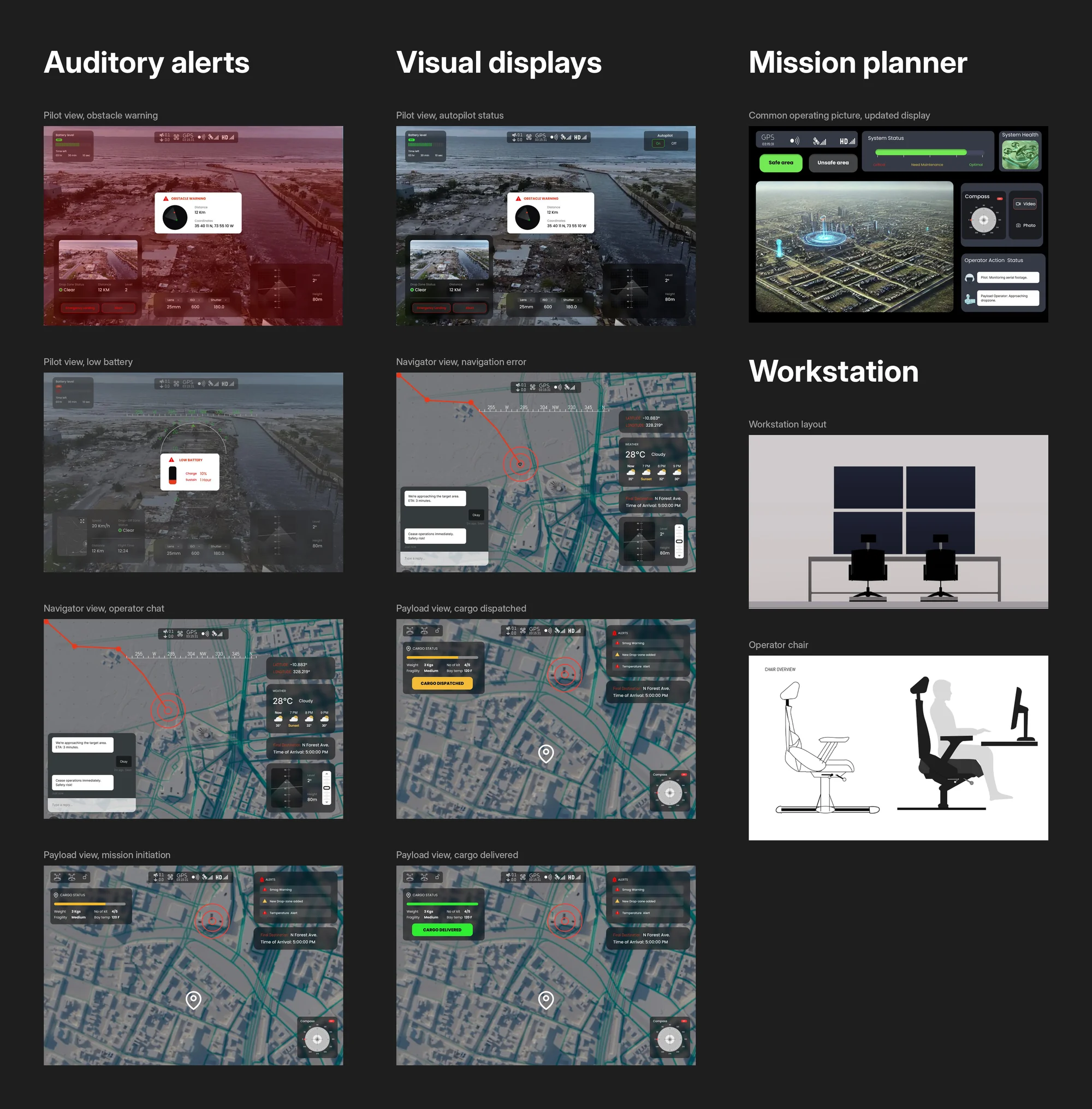
Our six-person team designed displays for three operator roles: pilot, navigator, and payload operator. We proposed assigning routine flight and monitoring tasks to automation while preserving human decision authority. I contributed to the shift toward cargo delivery, pilot-control sketches, operator requirements, and auditory alerts.
- Status
- Design concept, not tested with operators.
- Role
- Setting direction, UX reasoning, and quality control
- Team
- Six students (HSE 542)
- Tools
- Figma, Adobe Illustrator, Google Slides
01
The question
How could a disaster-relief UAS assign routine flight tasks to automation while keeping mission decisions with its pilot, navigator, and payload operator?
02
Research and references
Our reference board drew on published drone control concepts from Dribbble and Behance, including Fuselab Creative's AG.Drone, most of them agricultural or camera-drone dashboards that fit telemetry, route progress, and a live feed onto one dark screen. The team collected them on September 18, while the concept was still a firefighting drone, so they shaped layout and visual density more than the relief task, and after the cargo pivot we sorted a second set by operator role. In early October, a DJI Enterprise post on building digital twins from drone imagery became the reference for the mission planner's 3D view.
03
Concept development
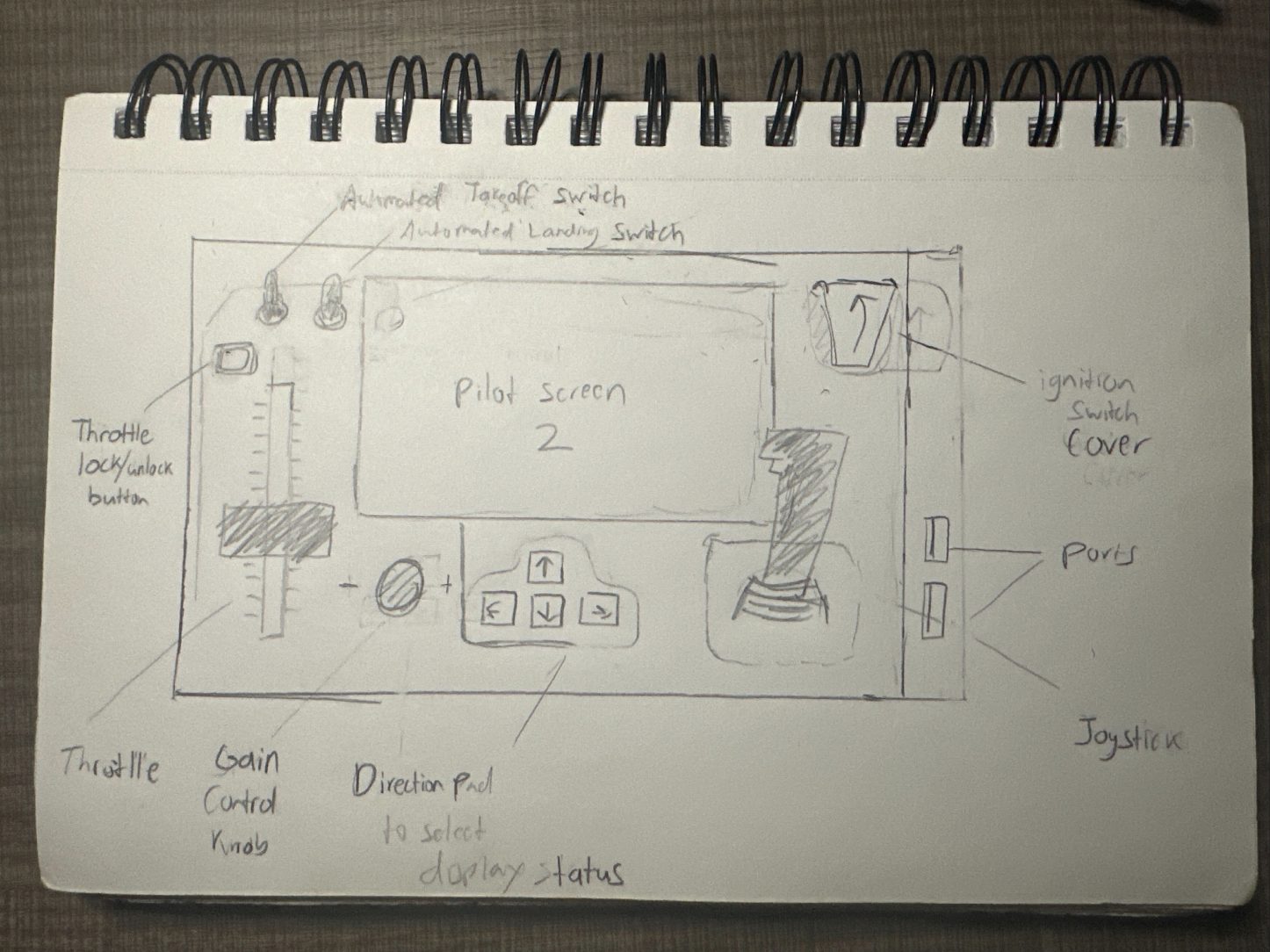
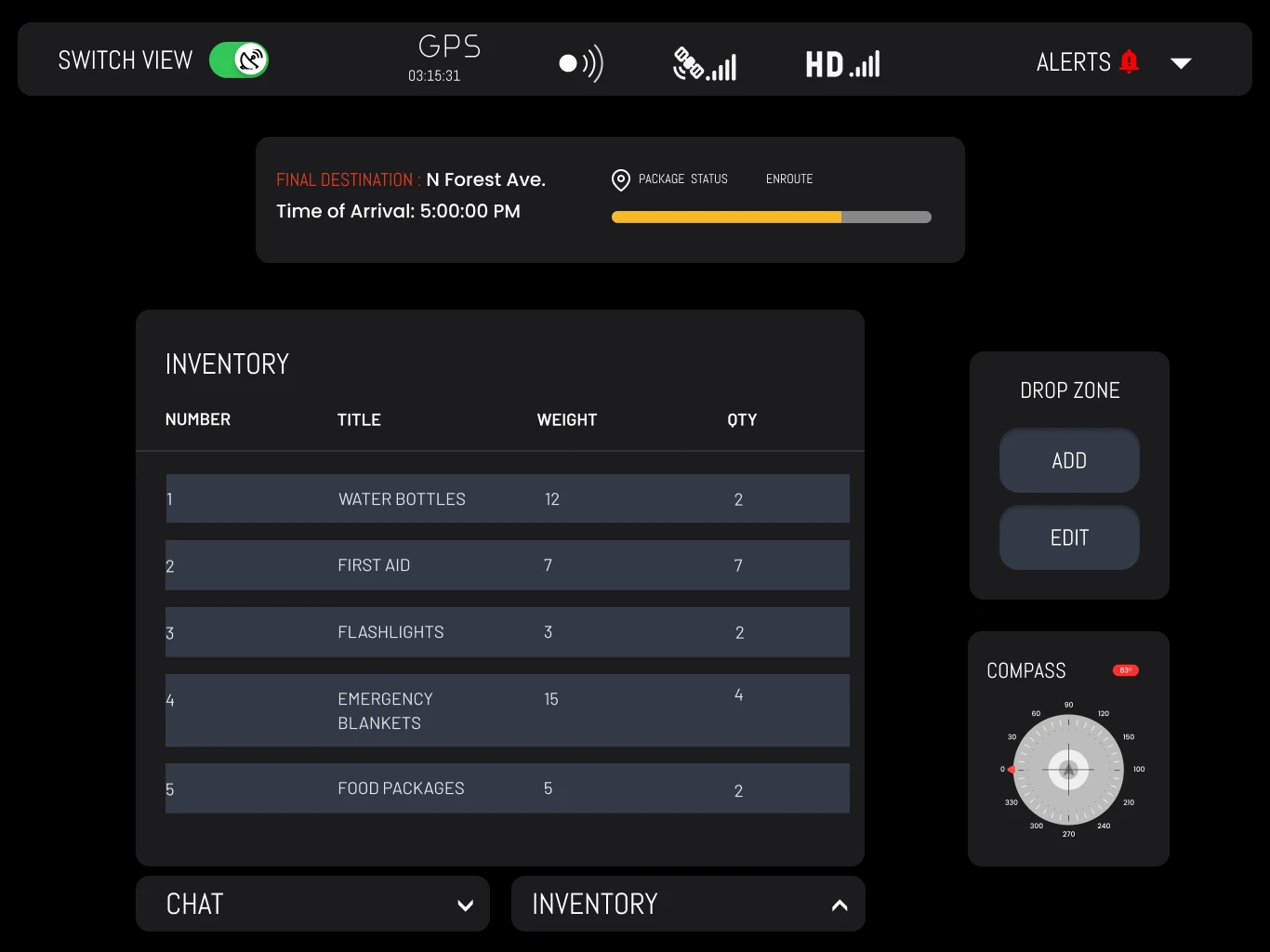
The concept began as a firefighting drone with thermal imaging, and I took the pivot to cargo delivery to our professor after a teammate pointed out that cargo keeps a payload operator role the thermal concept would cut. The workflow then split across a pilot, a navigator, and a payload operator whose view became a supply inventory rather than another map. Each course update added a layer (displays, then controls, then the workstation), and along the way I sketched the pilot's control panel on paper and proposed extending the mission planner's digital twin into one picture all three operators share.
04
Design rationale
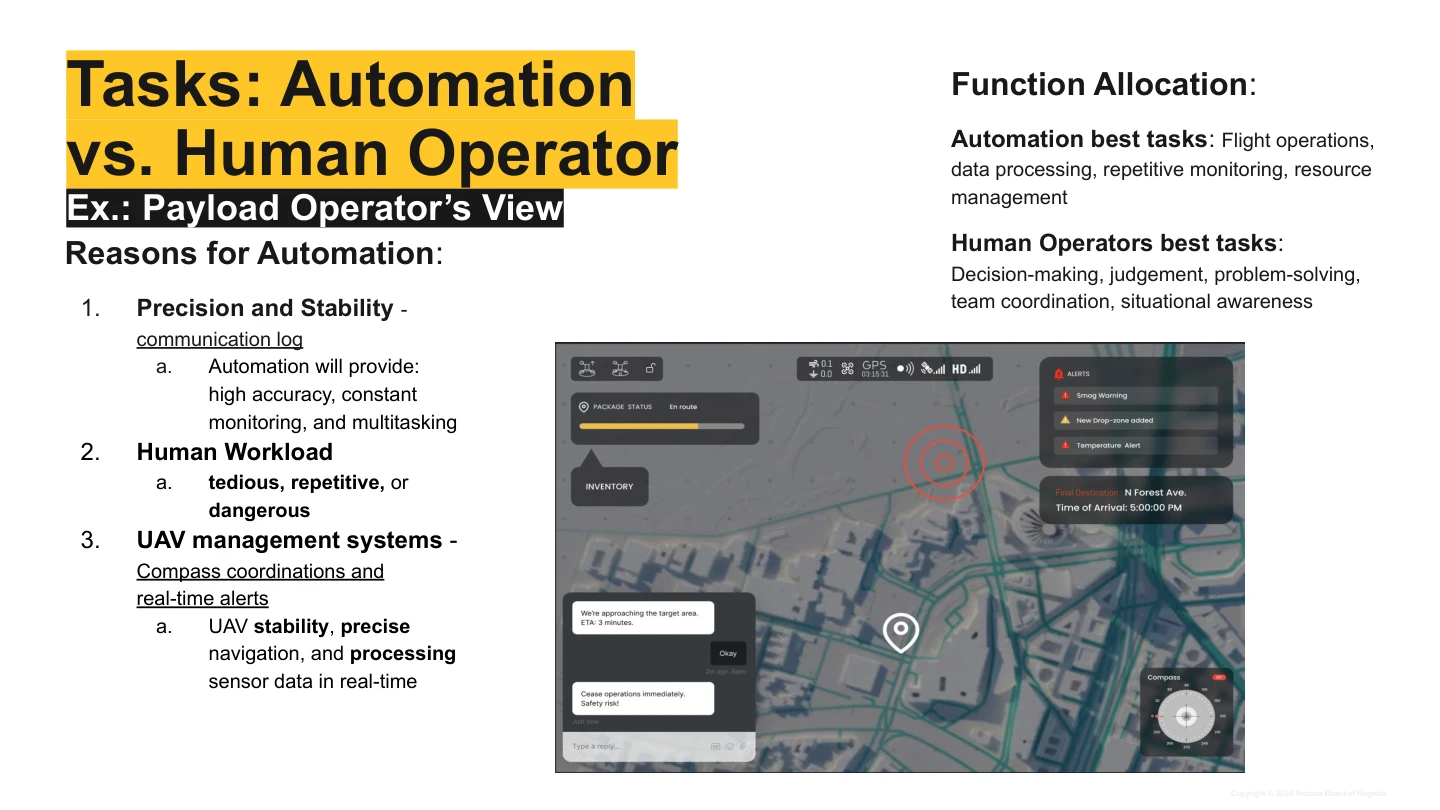
The final pages follow the team's function allocation (automation handles flight operations, data processing, and routine monitoring, and the operators keep decisions, judgment, and coordination), with a proposed shared digital-twin view to give all three roles a common operating picture. Alerts share a color code across views (red for faults such as a navigation error or disengaged autopilot, yellow for cargo in transit, green for confirmed states), and I sourced the tones and synthesized voice lines behind the auditory alerts. The workstation sizes monitors, controls, and seating from anthropometric data, including the operator chair I drew, and none of it was tested with operators, so the board documents design intent.